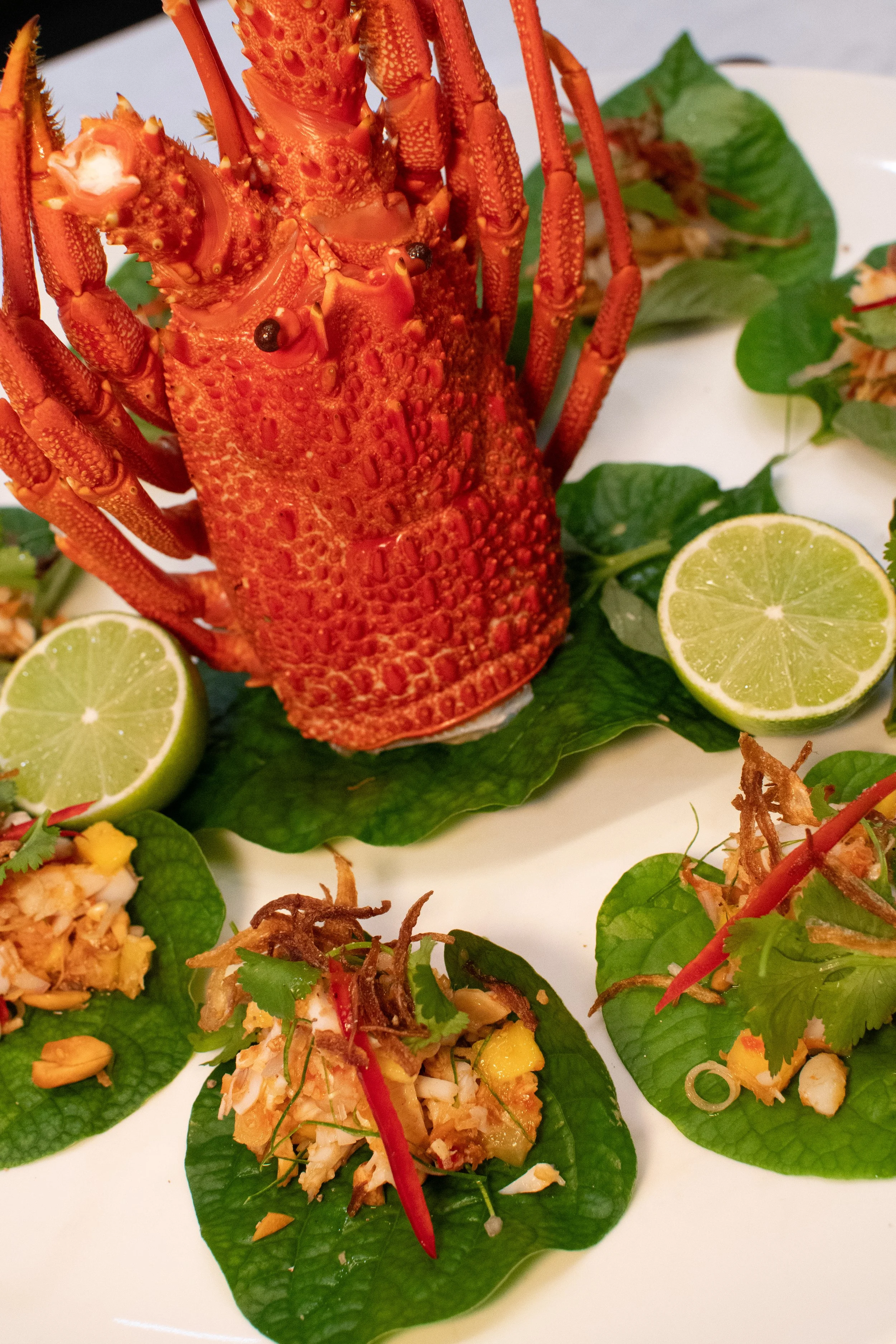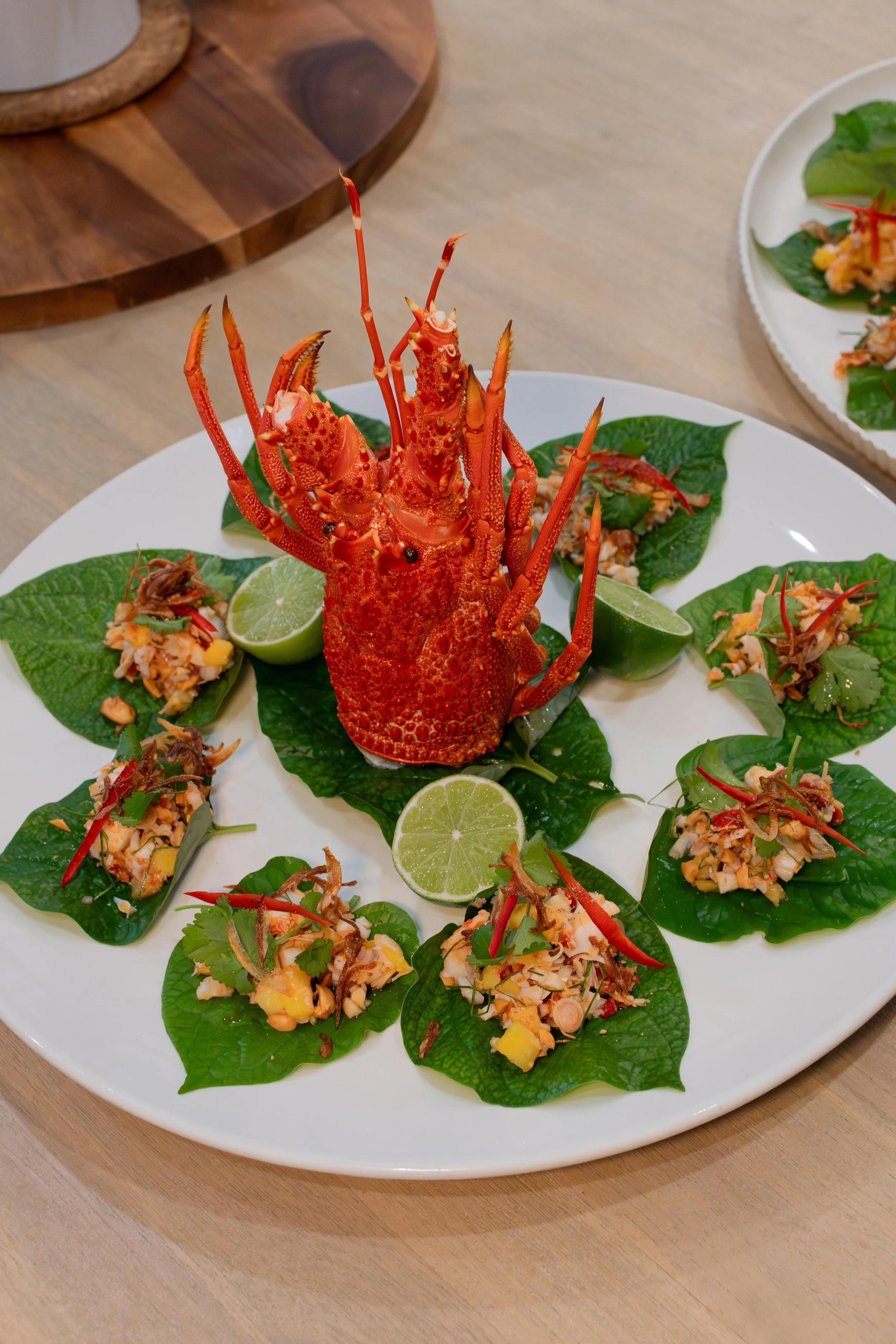
Thai Lobster Miang
Fresh, flavourful and easy to make, the Thai Lobster Miang will have guests wanting more and begging you for the recipe.
This recipe requires minimal cooking and is made up of ingredients that are mostly easily accessible - although we use Lobster, the protein can be substituted with chicken/pork/beef.
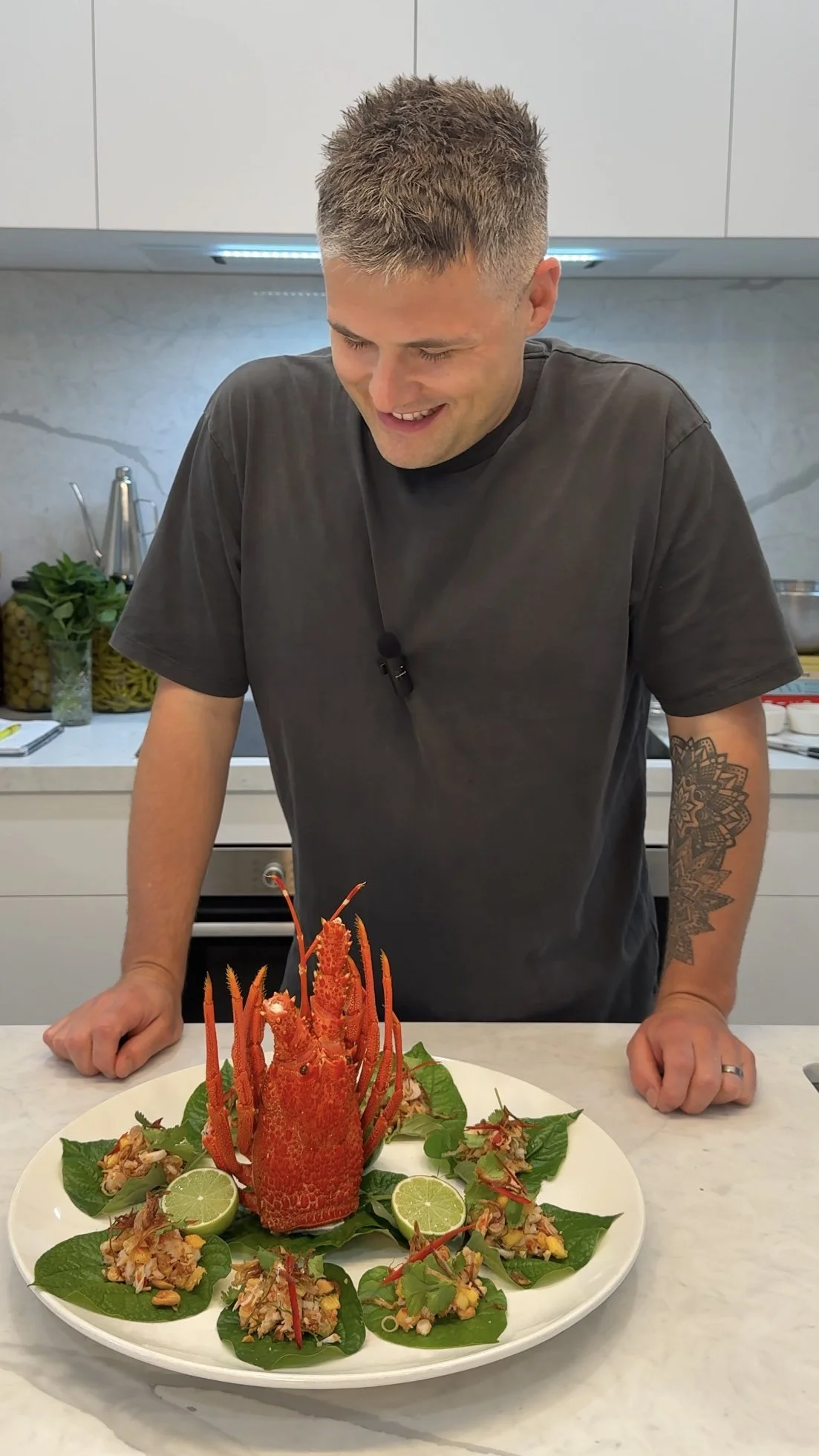
Created by Phil Helyard, who has been a part of our restaurant for over 10 years, this recipe is a Peel St version of food that is usually found at the Christmas table.
We hope you try it out and enjoy it with you family, friends and loved ones.
Makes: approximately 30 portions
Serves: 6-8 people.
Click here for video.
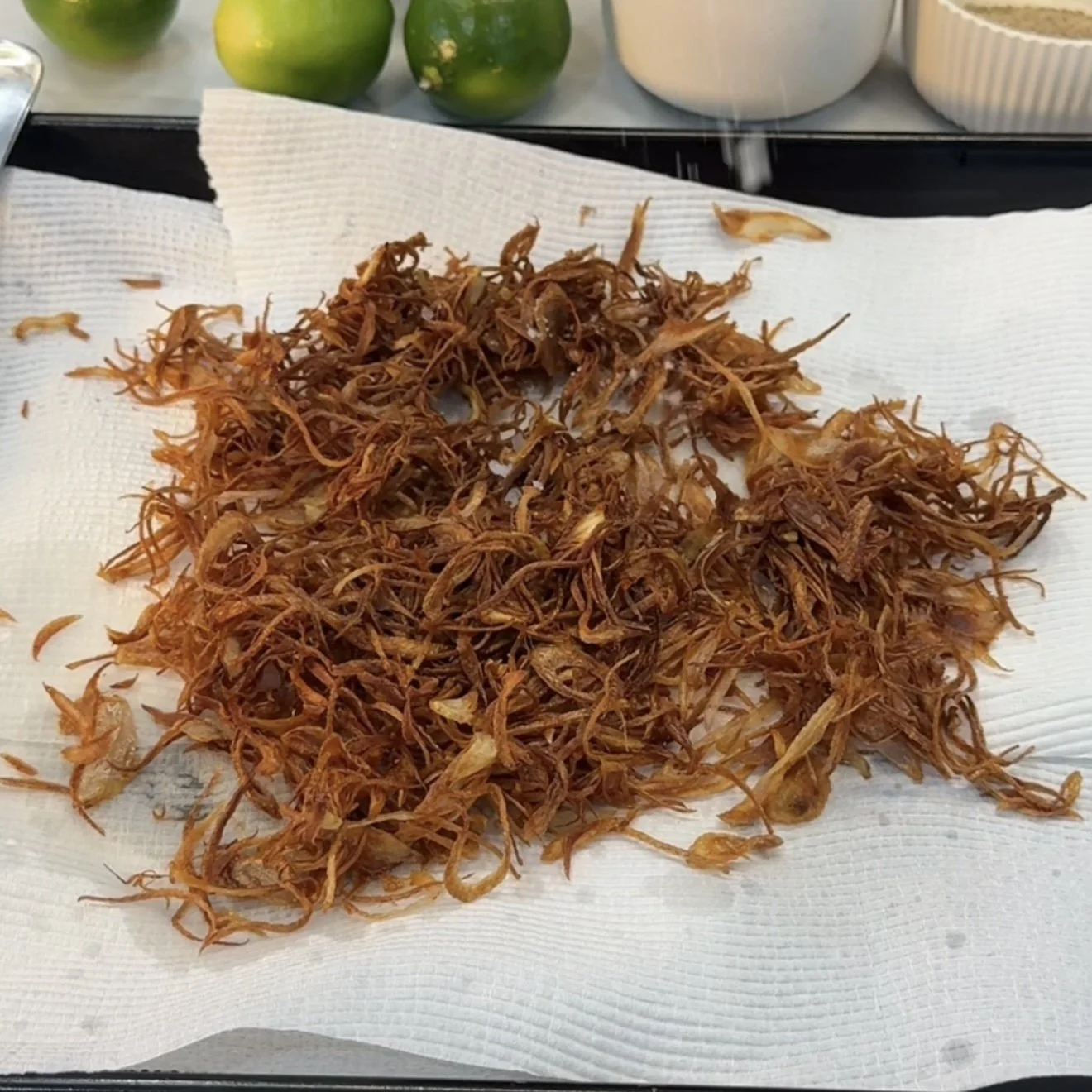
Crispy fried shallots
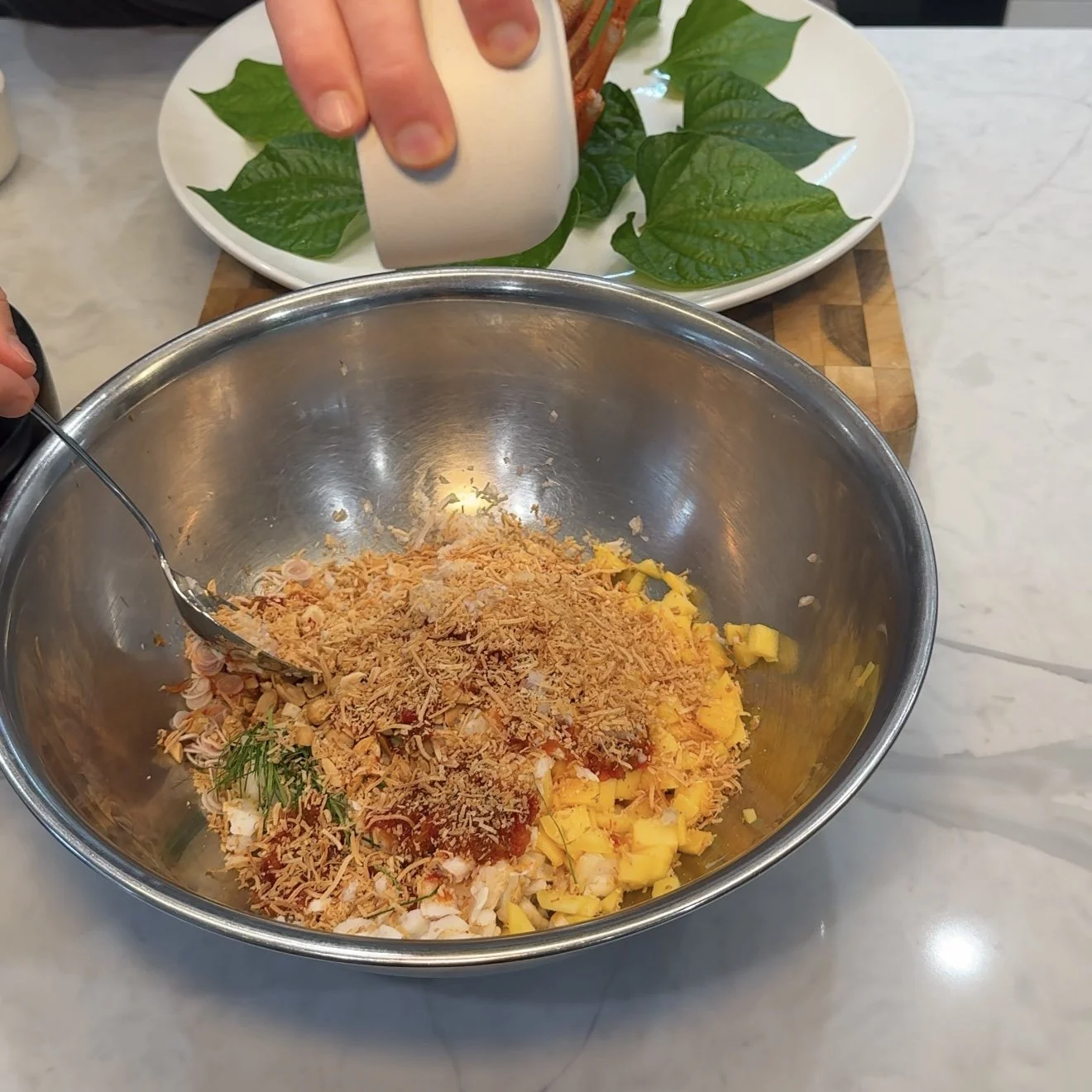
Lobster mix
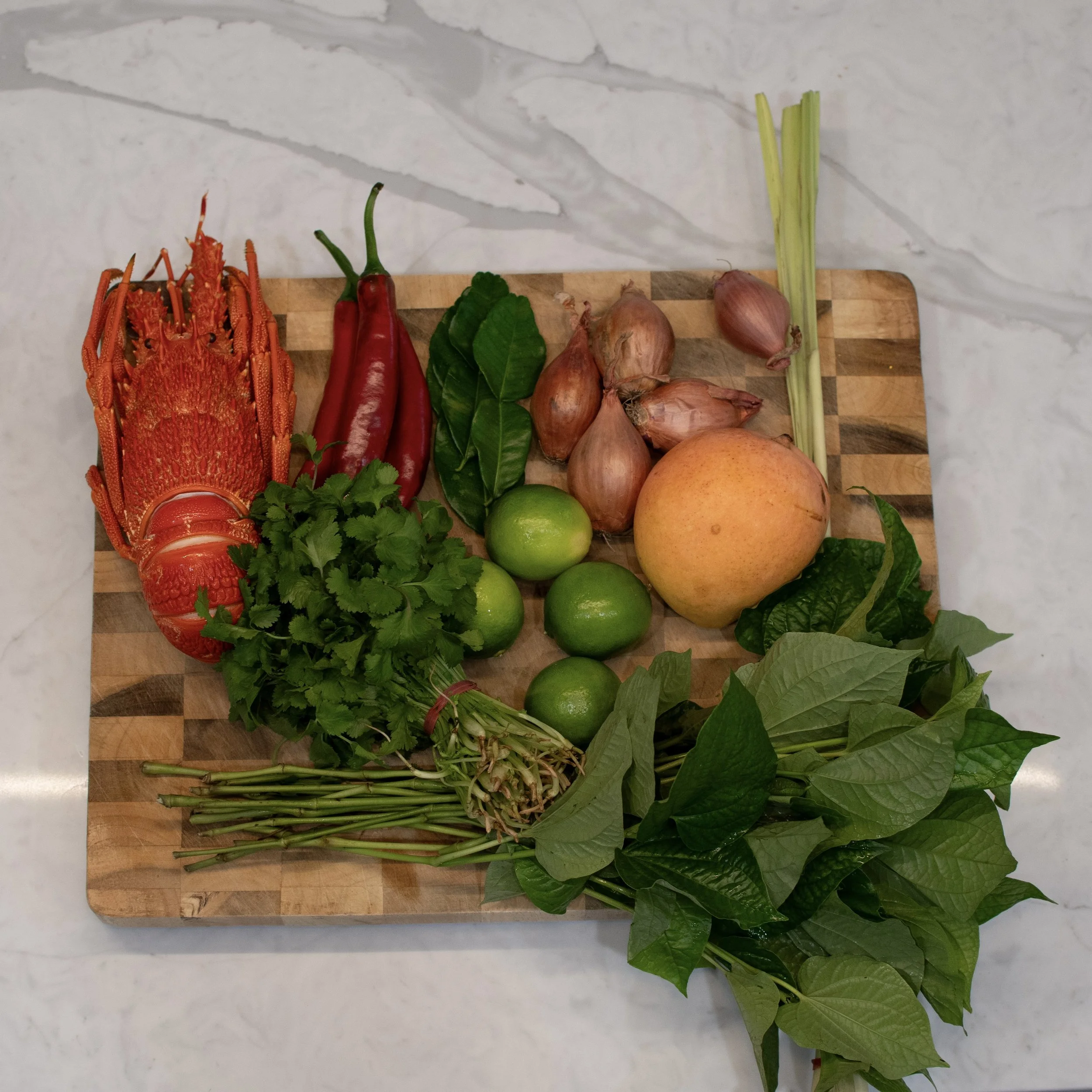
Ingredient List
Nam Jim dressing
2 long red chillied
3-4 garlic cloves
1/2 bunch of coriander roots (washed)
1-2 limes
3 tablespoons sugar
6 tablespoons fish sauce
Pinch of white pepper
Garnish
5 shallots, thinly sliced.
Pinch of flake salt
1/4 bunch coriander
1/2 long red chilli
Miang mix
700g cooked lobster (including the head)
100g toasted coconut
4 kaffir lime leaves, halved
2 shallots, finely diced
1 mango, diced (Phil uses Kensington, although green mango works as well)
2 lemongrass stick, finely sliced
100g of roasted peanuts, chopped
32 betel leaves (ask Hamish from Metro Fresh Findon to source them for you. Alternatively, you can find them in some Asian grocers.
Method
Nam Jim dressing
Wash the coriander roots very well.
Roughly chop the chillies, garlic and coriander roots. Keep them separate for now.
Using a mortar and pestle, pound the garlic with a pinch of white pepper to a rough paste. Add the coriander roots and pound. Repeat step for the chillies.
Once the paste has achieved a smoother texture (still a big grainy) add the sugar and fish sauce. Mix well and taste. Add fresh lime juice.
Adjust the flavour so that it tastes sweet, salty and sour.
Garnish - fried shallots
In a medium-sized pot or wok, fill it enough neutral oil for shallow or deep frying.
Add the shallots - I prefer starting this step while the oil is in room temperature as opposed to preheated. The shallots will cook more evenly this way and are less likely to burn. Once shallots have been added, turn the heat to high. Keep an eye on the shallots, shuffling constantly with a spider until caramel gold. Don’t wait until they turn too dark, as they will continue to cook once removed.
Place the shallots onto paper towel and separate them with a fork. Season with a pinch of flake salt.
Once cooled, place the shallots in a sealed container in your pantry for up to 1 week of in the fridge for up to 1 month.
Lobster mix
Wash the betel leaves well and pick the stems. If there are left over leaves, store them in an airtight container in the fridge with a damp paper towel on top of the leaves.
There are a couple of ways to remove the flesh from the lobster. Pick the one you’re more comfortable with:
Remove head from the lobster. Place the body flat on a chopping board and with a knife, cut the lobster in half straight down the middle. After removing the ‘poo tube’, scoop out the meat with a spoon, making sure to check inside the head for meat.
Remove head from the lobster. With kitchen scissors, carefully cut out the ‘feet’ of the lobster and pull out the flesh from below.
Make sure to save the head to use as a centrepiece when serving.
Roughly chop the meat into pinkie-nail-sized pieced and add them to a medium mixing bowl. Add the lime leave, lemongrass, raw shallots and mango and mix well.
Follow with the peanuts, toasted coconut and a pinch of white pepper and mix again.
Dress the mix with your desired amount of nam jim. Remember, you can always add more on top before eating.
Plating
On a large serving platter, place 2 betel leaves in the centre and position the lobster head on top. Layer the remaining betel leaves around it.
Spoon the lobster mix onto each leaf and garnish with coriander, fresh chopped chilli and crispy shallots. Add more nam jim if you’d like.
Serve and enjoy.